
How Did a Recruiter Become a Workforce Development Expert?
Written By: Roxxann Sczepanik
If you had told me years ago that people would someday refer to me as a workforce development expert, I probably would have laughed.
After all, I'm a recruiter.
I don't run government workforce programs. I don't manage apprenticeship funding. I don't write workforce legislation.
What I do is spend every day at the intersection of talent, leadership, construction, and economic growth.
As a recruiter specializing in mission-critical infrastructure, data center construction, and real estate development, I've had the unique opportunity to observe workforce challenges from a perspective few people get to see. I've spoken with thousands of executives, project leaders, engineers, superintendents, tradespeople, educators, workforce organizations, and economic development professionals.
Over time, I discovered something surprising:
Many of the problems organizations call recruiting problems are actually workforce development problems.
Can a Recruiter Be a Workforce Development Expert?
The short answer is yes.
In fact, recruiters often have one of the most comprehensive views of the workforce ecosystem.
While educators see students, employers see openings, and workforce boards see programs, recruiters see the entire talent supply chain.
We see where talent originates.
We see where talent moves.
We see where talent leaves.
We see what employers need today and what they will need five years from now.
That perspective creates valuable workforce intelligence.
The best recruiters aren't simply filling positions. They are identifying labor trends, succession risks, skills gaps, retention challenges, and emerging workforce needs before they become business problems.
The Difference Between Recruiting and Workforce Development
Many people assume recruiting and workforce development are separate disciplines.
They're not.
Recruiting focuses on today's workforce needs.
Workforce development focuses on tomorrow's workforce needs.
Recruiting answers the question:
"Who can do the job today?"
Workforce development answers the question:
"Who will be qualified to do the job five years from now?"
Organizations that focus exclusively on recruiting often find themselves competing for the same limited talent pool.
Organizations that invest in workforce development create new talent pipelines.
The most successful companies understand they need both.
What Data Center Construction Taught Me About Workforce Development
My work in data center construction accelerated my understanding of workforce development.
The mission-critical industry is growing at an unprecedented pace. Artificial intelligence, cloud computing, hyperscale expansion, power infrastructure, and digital transformation are driving demand for skilled professionals across construction, engineering, operations, commissioning, and project management.
Yet many organizations continue to frame the challenge as a labor shortage.
I see it differently.
I believe we have an innovation problem.
We have an investment problem.
We have a leadership problem.
We have a workforce planning problem.
When companies wait until they need talent to think about talent, they're already behind.
The organizations succeeding in today's market are building relationships with schools, supporting apprenticeship programs, investing in leadership development, creating clear career pathways, and planning workforce needs years in advance.
That's workforce development.
Why Recruiters Belong in Workforce Development Conversations
Recruiters have access to real-time labor market data that many organizations never see.
Every day we hear:
Why candidates leave employers
Why candidates accept opportunities
Which skills are becoming more valuable
Which markets are growing
Which leadership practices attract talent
Which workforce strategies fail
Those insights matter.
They help companies make smarter workforce decisions.
They help educators align programs with industry needs.
They help economic development leaders understand labor market realities.
Most importantly, they help organizations prepare for the future.
The Future of Workforce Development
The future of workforce development isn't about finding more people.
It's about creating better systems.
It's about helping employers think beyond immediate hiring needs.
It's about connecting education, industry, and economic development.
It's about developing leaders who understand that talent strategy is business strategy.
That's why I've become increasingly involved in workforce development discussions, industry events, speaking engagements, and conversations about the future of work.
Not because I set out to become a workforce development expert.
But because recruiting gave me a front-row seat to the challenges shaping the future workforce.
The more I learned, the more I realized that workforce development isn't separate from recruiting.
It's recruiting at scale.
It's recruiting with foresight.
And ultimately, it's one of the most important conversations facing the data center, construction, and mission-critical industries today.
About the Author
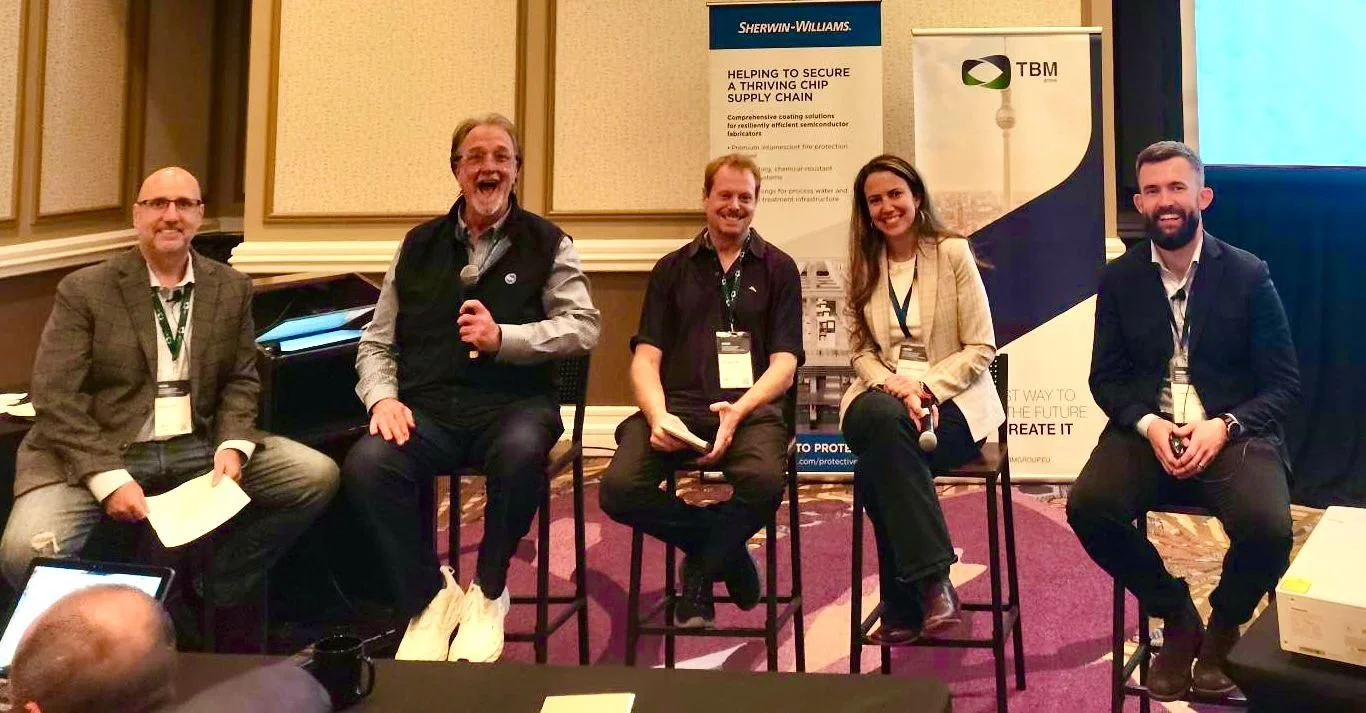
Roxxann Sczepanik is a Senior Partner at Joseph Chris Partners specializing in data center construction, mission-critical infrastructure, workforce strategy, talent acquisition, and leadership recruitment. She is a speaker, workforce advocate, and industry voice focused on the future of talent in the built environment.
You can learn more about Roxxann’s multiple speakerships on industry specific topics with Data Center News Show, Data Center World Power, and more on her Podcast Page.
